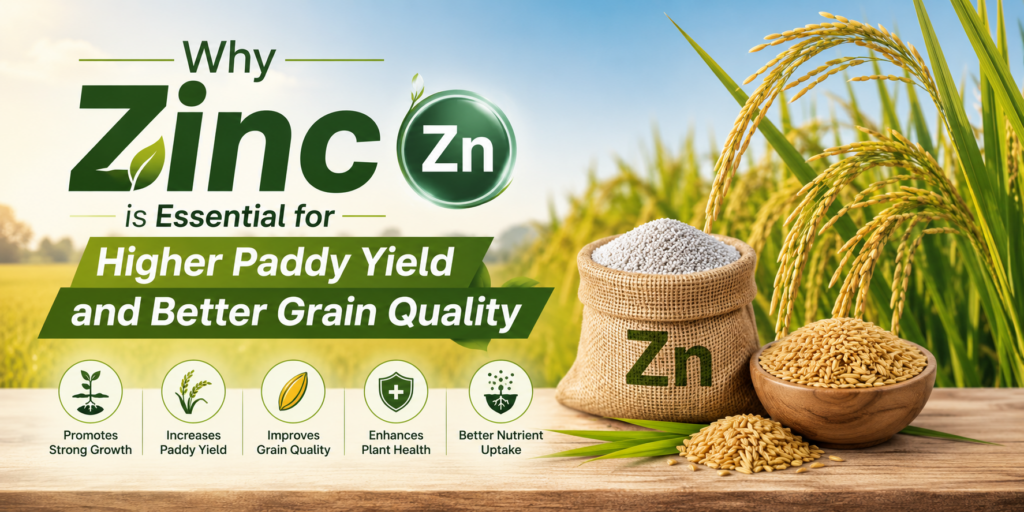
Zinc may be required in smaller quantities than nitrogen, phosphorus and potassium, but it plays an important role in plant growth, yield formation and grain quality. For paddy growers, effective zinc management is therefore not simply about adding zinc; it is about understanding soil conditions, maintaining zinc availability and supporting the crop throughout its growth cycle.
We believe that better zinc management starts with a clear understanding of the soil and crop. Soil testing can help assess zinc availability and identify whether supplementation is required. At the same time, making zinc available to the plant can be a major challenge because zinc can become fixed or otherwise less available through interactions with the soil and other nutrients. Managing both zinc application and zinc availability is therefore an important part of working towards better paddy yields and grain quality.
What Does Zinc Do for Paddy Plants
We consider zinc an essential micronutrient because it supports several physiological processes within the rice plant. Zinc contributes to enzyme activity, protein synthesis, plant hormone production and photosynthetic processes. These functions influence how efficiently the crop develops leaves, produces tillers, forms reproductive structures and ultimately fills its grains.
When zinc availability is inadequate, paddy plants may show stunted growth, reduced tillering and characteristic symptoms such as Khaira disease. Deficiency can become more significant where soil conditions restrict zinc availability. This is why we encourage growers to look beyond visible symptoms and consider soil testing, crop history and agronomic guidance when deciding on zinc management.
We also recognise that simply applying a zinc-containing input does not always mean that the crop will have continuous access to zinc. Soil pH, nutrient interactions, organic matter and other soil characteristics can influence availability. In our view, the goal should be to combine appropriate zinc application with practices that help keep zinc in a plant-available form.
Zinc and Higher Paddy Yield
Higher yield depends on the crop converting available resources into healthy vegetative growth, productive tillers, panicles and filled grains. We see zinc as one of the micronutrients that supports these processes. Adequate zinc nutrition contributes to healthy vegetative growth and tiller development and also supports reproductive development and pollen viability, which can influence grain formation.
Research referenced by ICAR from the Tarai region of Uttarakhand demonstrates the potential impact of zinc management. In the reported field study, applying 100% NPK with zinc increased rice yield by 45% compared with 100% NPK alone. The study also highlighted integrated nutrient management as an approach for sustaining zinc availability over time. For us, the key takeaway is that balanced nutrition matters: adding more of one major nutrient cannot necessarily compensate for a micronutrient that is unavailable or deficient.
Zinc and Grain Quality
For us, paddy production is not only about achieving a higher yield. Grain quality is equally important to farmers, millers, processors and consumers. Zinc nutrition can influence plant metabolic processes and nutrient composition, making it relevant to the broader objective of producing healthy, well-developed grain.
The research referenced in the source material also shows that zinc and nitrogen management can affect growth, grain yield, zinc uptake and grain protein content in direct-seeded rice. Zinc application at different crop stages influenced growth attributes and yield, while a combination of nitrogen and zinc application at the dough stage produced the highest grain protein content and protein yield among the treatments evaluated. We therefore recommend looking at zinc as part of a complete crop nutrition programme rather than as an isolated micronutrient.
Zinc Deficiency: What Should Farmers Look For
We encourage growers to recognise possible zinc deficiency early so that corrective action can be considered before crop performance is significantly affected.
Common effects associated with zinc deficiency in rice include:
- Reduced plant growth and vigour
- Reduced tillering
- Smaller or restricted leaf development
- Poor crop establishment
- Reduced reproductive performance
- Characteristic symptoms associated with Khaira disease
- Lower yield potential
However, we do not recommend relying on visual symptoms alone when making nutrient decisions. Soil testing, crop history and professional agronomic advice can provide a more reliable basis for determining whether zinc supplementation is required and how it should be managed.
How Can Zinc Availability Be Improved
We believe zinc management has two connected parts: applying the right amount of zinc and making sure the applied or existing zinc remains available to the crop. Zinc can become fixed or less soluble in soil, so improving availability can be as important as supplying the nutrient itself.
Zinc-solubilising microorganisms can play a useful role here. Zinc Solubilising Bacteria (ZSB) are beneficial microorganisms that help convert relatively insoluble forms of zinc into more soluble forms that plants can access. This biological approach can complement conventional nutrient management where appropriate.
Our Zinc Solubilising Bacteria
Our Zinc Solubilising Bacteria (ZSB) is formulated to solubilise insoluble zinc into a soluble form. We position it as a biological nutrient-management option that can support processes such as auxin synthesis, photosynthetic activity, protein and carbohydrate synthesis and plant growth. Paddy is among the crops for which we list our ZSB product, and our product information also states its relevance in managing conditions associated with Khaira disease.
We provide multiple application options for our ZSB, including seed treatment, soil application, drip application, root dipping and foliar spray. We always recommend following the product label and our technical guidance for dosage, timing, storage and compatibility rather than applying a generic rate.
Narmada NewTrient Zinc 39.5% Liquid
Alongside biological approaches, we also offer Narmada NewTrient Zinc 39.5% Liquid as a zinc-focused crop nutrition option. We see a liquid zinc formulation as a practical part of a broader paddy nutrition programme where zinc supplementation is recommended. It can be considered during stages when maintaining adequate zinc availability is important, particularly during active vegetative development.
Our approach is not to treat liquid zinc as a standalone solution. We recommend using it as part of an overall nutrient-management strategy based on soil status, crop requirement, the recommended application stage and the product’s prescribed dosage and method of use.
Supporting Zinc Through Better Nutrient Management
We do not look at zinc independently from other nutrients. Paddy requires a balanced supply of nitrogen, phosphorus, potassium and micronutrients throughout the crop cycle. Our Bio NPK combines nitrogen-fixing, phosphate-solubilising and potassium-mobilising bacteria. We formulate and position it to help improve the availability of nutrients, including micronutrients such as zinc, while supporting seed germination and overall plant growth. It is listed for cereal crops among its application areas.
This type of biological nutrient management can be used alongside appropriate soil fertility practices to improve overall nutrient availability. We also recognise the importance of potassium because it contributes to plant strength, stress response and grain development. Our Potassium Mobilising Bacteria (KMB) is designed to mobilise insoluble potassium into a more available form and is listed for cereal crops. Our product information also highlights its role in stress resistance and produce quality and shelf life.
Our objective is therefore not simply to add zinc. We aim to help create a balanced nutrient environment in which the paddy plant can access the nutrients it requires at the right stages.
Zinc Management Across the Paddy Crop Cycle
We recommend considering zinc requirements and zinc availability from establishment through grain filling, rather than treating zinc as a one-time intervention.
1. At Establishment
During early growth, good nutrient availability helps paddy establish a healthy root and shoot system. Where recommended, suitable microbial inputs can be incorporated into the crop nutrition programme according to product instructions. Soil-test results can also help determine whether zinc supplementation should be part of the establishment plan.
2. During Vegetative Growth
This is an important period for tillering and canopy development. Adequate zinc availability supports physiological processes associated with healthy plant growth. Where zinc supplementation is recommended, Narmada NewTrient Zinc 39.5% Liquid can be considered as part of the crop nutrition programme, following the prescribed application method and dosage.
3. Around Reproductive Development
As the crop moves towards panicle formation, flowering and grain development, maintaining balanced nutrition becomes increasingly important. Research referenced in the source material indicates that the timing and method of zinc application can influence yield attributes and nutrient uptake in rice. We therefore encourage growers to consider both nutrient requirement and nutrient availability at this stage.
4. During Grain Filling
The final stages of crop development determine much of the harvested grain’s quantity and quality. Maintaining balanced nutrition can help the crop complete grain development effectively. At this stage, our focus remains on maintaining an appropriate overall nutrient environment rather than relying on a single nutrient or product.
Zinc and Nutritional Security
We see the importance of zinc in rice extending beyond agricultural productivity. Rice can also contribute to dietary zinc intake, particularly in populations where rice is a major staple food. The source material notes that ICAR has documented high-zinc varieties such as DRR Dhan 45, which has an average zinc concentration of 22.6 ppm in polished rice and has demonstrated yield performance above 5 tonnes per hectare under recommended conditions.
For us, this illustrates the broader connection between soil nutrition, crop nutrition, grain composition and human nutrition.
A Balanced Approach to Better Paddy Production
We believe higher paddy yield and better grain quality depend on several interconnected factors, including seed quality, irrigation, soil fertility, pest and disease management and balanced crop nutrition. Zinc is one component of this system, but its importance should not be underestimated.
Our recommended first step is to understand the nutrient status of the soil and crop. Soil testing can help assess zinc availability, while crop observations and agronomic guidance can help determine the appropriate intervention. Where zinc availability is inadequate, suitable zinc fertilisation or biological approaches such as our Zinc Solubilising Bacteria can be incorporated into an integrated nutrient-management programme.
Our Zinc Solubilising Bacteria, Narmada NewTrient Zinc 39.5% Liquid, Bio NPK and Potassium Mobilising Bacteria provide complementary nutrient-management options that can be considered as part of a broader paddy nutrition strategy. We see these options as complementary rather than interchangeable, with the right choice depending on soil conditions, crop stage and the specific nutrient requirement.
Ultimately, we see effective zinc management as more than correcting deficiency. It is about improving nutrient availability, supporting healthy plant development, protecting yield potential and contributing to better-quality grain.
By combining soil testing, balanced fertilisation, appropriate water management and scientifically informed use of biofertilisers and zinc products, we believe paddy growers can build a more efficient and sustainable crop nutrition programme.