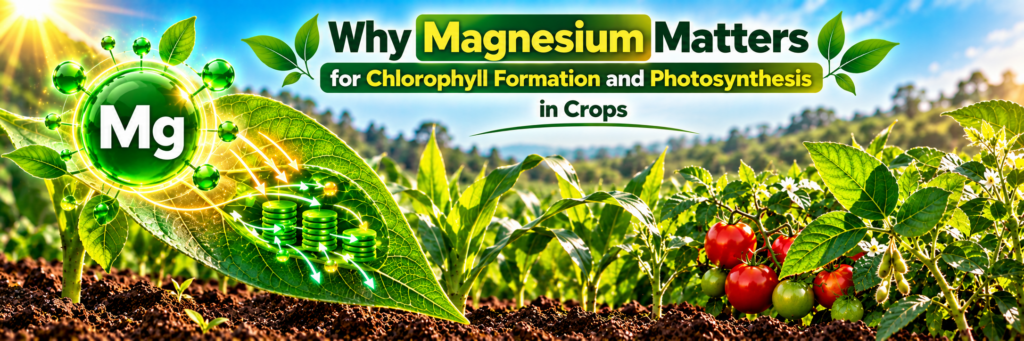
When we think about healthy green plants, one of the first things we notice is the colour of the leaves. That green colour comes from chlorophyll, the pigment that enables plants to capture light energy for photosynthesis. At the centre of this process is magnesium.
Magnesium is required in relatively small quantities compared with major nutrients such as nitrogen, phosphorus and potassium, but its role is important. It is the central mineral element in the chlorophyll molecule and is therefore closely connected with the plant’s ability to carry out photosynthesis.
For us, this makes magnesium an important part of balanced crop nutrition. We include Magnesium Sulphate in its Micro Nutrients portfolio alongside products such as Bentonite Sulphur, Zinc 4+, Ferrous Sulphate 19%, Narmada Star Sulphur 90% and Sulphur 90% DP. We also offer Calcium Nitrate with Magnesium as a liquid fertiliser, which can be incorporated into crop nutrition programmes where calcium and magnesium are required.
What Makes Magnesium Important
When we look at plant nutrition, magnesium has a role that goes beyond leaf colour. Because magnesium forms the central element of chlorophyll, adequate magnesium availability supports the plant’s photosynthetic system.
Photosynthesis allows plants to convert light energy into chemical energy, which supports growth and development. Magnesium is also involved in several enzyme-related processes within the plant.
This is why we consider magnesium as part of a wider nutrient-management programme rather than as a nutrient to address only when deficiency becomes visible.
1. Supporting Chlorophyll Formation
We begin with chlorophyll because it is the most direct connection between magnesium and photosynthesis.
Magnesium is positioned at the centre of the chlorophyll molecule. When magnesium availability is adequate, it supports the formation and functioning of chlorophyll in green tissues.
Healthy chlorophyll levels allow leaves to capture light efficiently and support the photosynthetic activity needed for continued plant growth.
For crops with high leaf biomass, maintaining balanced nutrition throughout the growing season is particularly important.
2. Supporting Photosynthesis and Plant Growth
Photosynthesis provides the energy that plants need to grow. We therefore need to protect the plant’s ability to maintain active, healthy leaves.
Magnesium contributes to photosynthetic activity and also supports a range of enzyme reactions involved in plant metabolism. Adequate magnesium nutrition can therefore complement the supply of nitrogen, phosphorus, potassium and other essential nutrients.
We should, however, remember that magnesium does not work in isolation. Plant performance depends on overall nutrient balance, water availability, soil conditions and crop management.
3. Recognising the Importance of Balanced Nutrition
When we manage crop nutrition, we often focus on nitrogen because of its important role in vegetative growth. However, supplying nitrogen alone does not guarantee efficient crop development.
A balanced programme needs to consider secondary nutrients and micronutrients as well. Magnesium, for example, supports chlorophyll formation and photosynthetic function, while other nutrients perform different roles in the plant.
This is where a complete nutrient-management approach becomes important. We can use primary fertilisers together with appropriate secondary and micronutrient sources according to crop needs and soil conditions. Calcium Nitrate with Magnesium can be included as a liquid fertiliser option where both calcium and magnesium are required.
4. Magnesium and Sulphur Together
One practical advantage of Magnesium Sulphate is that it provides both magnesium and sulphur.
Sulphur is also an essential plant nutrient involved in the formation of amino acids, proteins and other plant compounds. By supplying two nutrients together, Magnesium Sulphate can form part of a broader programme where both nutrients are required.
We list Magnesium Sulphate within its Micro Nutrients portfolio, alongside several sulphur-based products, giving growers options to address different nutrient requirements.
The appropriate source and application method should always be selected according to crop requirements and recommended agronomic practice.
5. Supporting Crops Through Different Growth Stages
We believe nutrient management should follow the crop cycle rather than remain the same from planting to harvest.
During vegetative growth, crops are building leaves and plant structure. As the crop moves towards flowering and fruit or seed development, its nutritional requirements change.
Our crop-management platform follows this stage-based approach across crops such as cotton, groundnut, soybean, mustard, paddy, maize, wheat, gram, potato, onion, chilli, tomato, pomegranate, mango, apple, cucurbits, capsicum, melons and citrus.
This reinforces the importance of considering the crop stage, nutrient requirement and growing conditions when planning fertiliser applications.
6. Integrating Magnesium into a Complete Nutrition Programme
We would not treat Magnesium Sulphate or Calcium Nitrate with Magnesium as replacements for the crop’s complete fertiliser programme. Instead, we see them as nutrient sources that can be integrated where magnesium, sulphur, calcium or combined nutrient requirements are identified.
A practical approach can include:
- Before planting: Assess soil fertility and identify potential nutrient deficiencies.
- During vegetative growth: Maintain balanced nutrition to support healthy leaf and root development.
- Before flowering: Review nutrient availability as the crop’s requirements begin to change.
- During reproductive growth: Continue appropriate nutrition based on crop stage and soil conditions.
- Where appropriate: Consider Calcium Nitrate with Magnesium as a liquid fertiliser source based on crop requirements and recommended application practice.
- Throughout the season: Monitor crop development and follow product-specific application recommendations.
This approach allows us to manage magnesium as part of balanced crop nutrition rather than as an isolated corrective measure.
Looking Beyond Green Leaves
For us, the importance of magnesium begins with chlorophyll but does not end there.
Magnesium supports the formation of chlorophyll and is closely linked with photosynthesis, making it an important component of plant nutrition. Maintaining adequate magnesium availability can complement the wider supply of essential nutrients required for healthy crop development.
Our Magnesium Sulphate provides a source of magnesium and sulphur within its Micro Nutrients range, while Calcium Nitrate with Magnesium provides a liquid fertiliser option supplying calcium and magnesium.
With soil assessment, crop-stage planning and balanced nutrient management, we can support healthy leaves, active photosynthesis and more efficient crop development while ensuring that magnesium receives the attention it deserves within the overall nutrition programme.