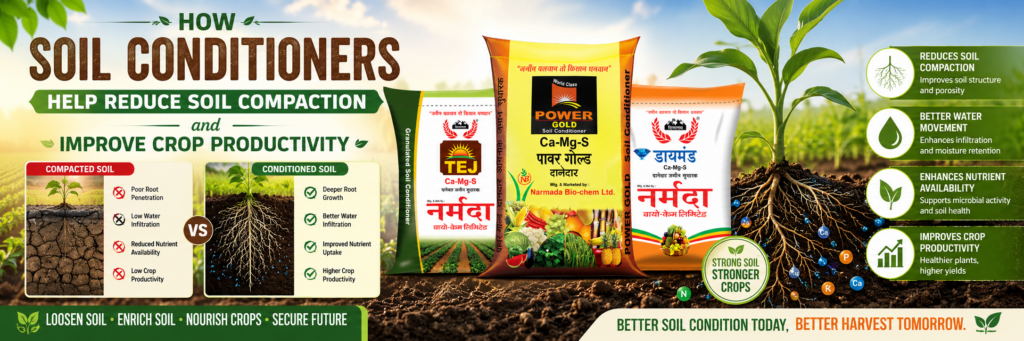
Soil is not simply a medium in which crops stand upright. It is a living, breathing ecosystem home to billions of microorganisms, home to complex chemical reactions, and home to the nutrient cycles that have sustained plant life for millions of years. When we treat it well, it feeds our crops generously. When we exhaust it without replenishment, it becomes less able to support life. Integrated Nutrient Management, or INM, is the approach that attempts to find a working balance between the two.
Integrated Nutrient Management (INM) is an economically viable, environmentally friendly, and socially acceptable approach to agriculture. It improves nutrient use efficiency, enhances yields, and strengthens soil health by integrating organic, biological and chemical sources of plant nutrition. It acknowledges both what fertiliser science has achieved the ability to correct specific deficiencies with precision and what it cannot replace: the deep, slow fertility that comes from healthy soil biology.
The Three Pillars of Integrated Nutrient Management
The first pillar is inorganic fertilisation. Chemical fertilisers remain irreplaceable for supplying large quantities of nitrogen, phosphorus, and potassium in forms the plant can use quickly. Used alone, they can increase yields dramatically. But used exclusively over many seasons, they can gradually degrade soil structure, deplete organic matter, and suppress the microbial communities that contribute to natural fertility.
The second pillar is organic matter addition. Compost, farmyard manure, green manures, and crop residues all contribute organic carbon to the soil. This carbon acts as the primary energy source for soil microorganisms, enabling biological activity that underpins nutrient cycling. As organic matter decomposes, it releases nutrients in slow, steady forms, improves soil aggregation, and enhances the soil’s moisture-holding capacity benefits that chemical fertilisers alone cannot deliver. Organic fertilisers such as BioGold and PROM further strengthen this process by supplying concentrated organic carbon inputs, supporting microbial activity, and improving overall soil structure and fertility.
The third pillar is biological inputs. Bio-fertilisers introduce beneficial microorganisms—such as nitrogen-fixing bacteria and phosphorus-solubilising fungi that function symbiotically with plant roots to enhance nutrient availability from the soil. These inputs improve nutrient uptake efficiency and support active soil biology. While they do not replace conventional fertilisers, they can significantly reduce the quantity required when biological systems are functioning effectively. Products such as Bio NPK and Muladhar exemplify this approach, supplying targeted microbial consortia that strengthen nutrient cycling and contribute to sustained soil fertility.
Soil Testing: The Starting Point
No nutrient management plan is trustworthy without knowing what the soil already contains. Soil testing measures available levels of major and minor nutrients, soil pH, organic carbon content, and sometimes microbial activity. The results inform every subsequent decision how much fertiliser to apply, which nutrients to prioritise, whether lime is needed to correct acidity.
In practice, soil testing remains underutilised on many Indian farms. The barriers are partly logistical accessing testing facilities, understanding results, translating them into action. Addressing these barriers is as important as developing better fertiliser products. Knowledge is only useful if it reaches the person making the daily decisions.
How Narmada Bio-chem Limited Supports INM Programmes
Narmada Bio-chem Limited’s product range is well-suited to an integrated nutrient management approach. Their fertiliser portfolio spans both mineral-based and organic-based categories, allowing farmers and agronomists to build programmes that draw on multiple input types rather than committing exclusively to one.
For the inorganic component of an INM programme, the company supplies macro- and micronutrient fertilisers in multiple formulations granular, water-soluble, and liquid providing flexibility across soil and foliar application methods. For the organic component, its range of products such as BioGold and PROM delivers the carbon-based inputs essential for sustaining soil biology and improving structure. Complementing this, biological solutions like Bio NPK and Muladhar enhance nutrient availability through microbial activity. This integrated offering spanning mineral, organic, and biological inputs enables farmers to address all aspects of nutrient management through a single supplier, simplifying procurement for large farms and cooperative buying groups.
Narmada Bio-chem Limited’s reach extends beyond India into regional agricultural markets, where integrated nutrient management is also gaining traction as an alternative to purely input-intensive approaches. Their experience across diverse growing regions has informed the development of versatile formulations that perform across a range of soil types.
Crop Rotation and INM: A Natural Alliance
Integrated nutrient management works best when it is part of a broader cropping system rather than applied in isolation. Crop rotation is one of the most powerful complements to INM. Leguminous crops pulses, groundnuts, soya fix atmospheric nitrogen through their root nodules, leaving the soil enriched for the following crop. When a cereal crop follows a legume in the rotation, it benefits from both the residual nitrogen and the improved soil structure that legume root systems create.
Deep-rooted crops bring nutrients from the subsoil to the surface as their residues decompose, effectively mining nutrients that shallow-rooted crops cannot reach. Diversity in root architecture across a rotation also helps maintain soil pore structure, reducing compaction and improving water infiltration factors that directly affect how well fertilisers perform.
Conclusion
Integrated nutrient management delivers measurable improvements within a season, but its full potential is realised through consistent application. Enhancements in soil organic matter and microbial activity develop progressively, strengthening soil function with each cycle. By maintaining a balanced approach across seasons, farmers can achieve stable yields in the short term while steadily building long-term soil resilience and productivity. Microbial communities recover gradually once conditions favour them. The farmer who adopts INM is making an investment in the land’s productive capacity that will pay dividends over the long term a difficult commitment when income depends on this season’s harvest, but a necessary one for genuinely sustainable yield.
The role of input companies in supporting this transition cannot be overstated. When suppliers like Narmada Bio-chem Limited invest in agronomic education alongside product sales, they help farmers understand not just what to apply, but why, when, and how the difference between a farmer following a label and a farmer managing a nutrient programme.