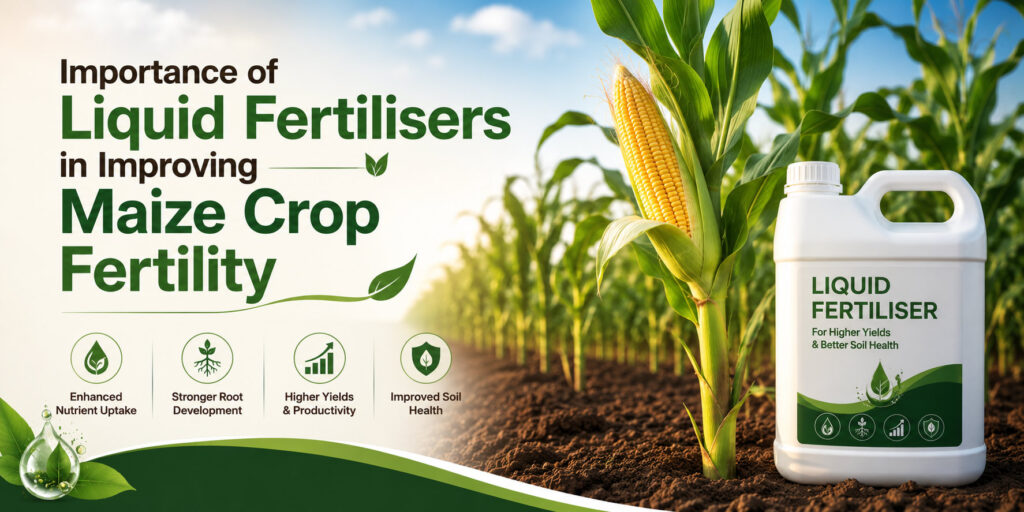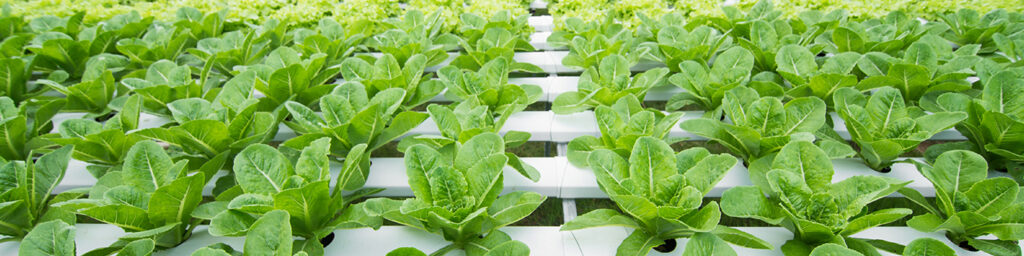
Speed matters in farming. A nutrient deficiency spotted on a Monday that cannot be corrected until the following weekend may already have cost the farmer a measurable proportion of their final yield. Plants at critical growth stages silking in maize, fruit set in tomatoes, grain fill in wheat are unforgiving. What they need, they need now. Liquid nutrient solutions were developed, in large part, to answer exactly that kind of urgency.
The liquid format fundamentally changes the dynamic between fertiliser application and nutrient availability. There is no dissolution step required, no waiting for granules to break down, no dependence on soil moisture to mobilise nutrients before the plant can access them. The nutrient is already mobile, already available, ready to be taken up the moment it reaches the root zone or, in the case of foliar application, the moment it contacts the leaf surface.
How Liquid Fertilisers Work
Liquid fertilisers are typically solutions or suspensions of dissolved nutrients at concentrations suitable for direct application after appropriate dilution. They can be applied as foliar sprays, through irrigation systems, in-furrow at planting, or banded near the root zone. This versatility in application methods is one of their most practical advantages, allowing nutrients to be delivered efficiently based on crop stage and field conditions.
Foliar-applied liquid nutrients are absorbed through the stomata the tiny pores on leaf surfaces and through the cuticle layer. This route bypasses soil chemistry entirely, making it particularly valuable in alkaline or very acidic soils where certain nutrients become chemically locked and unavailable through the root pathway. Iron, manganese, zinc, and boron are classic examples of elements that respond well to foliar delivery in problematic soils.
Root-applied liquid fertilisers move rapidly through the soil moisture film to root surfaces, where they are taken up by active transport mechanisms in the root cells. The absence of a dissolution step means nutrient concentration in the soil solution rises quickly after application, producing a faster crop response than equivalent solid fertilisers provide.
Precision in Practice
Liquid fertilisers integrate seamlessly with variable-rate application technology. Because they flow through pumps and nozzles rather than relying on spinner spreaders or other mechanical systems, their delivery rate can be adjusted in real time based on GPS-linked prescription maps. A field section that requires twice the phosphorus of the adjacent section receives exactly that without calibration issues, without overlap bands, without the uneven distribution that plagues mechanical spreaders at low rates.
For farmers using drip irrigation, liquid fertilisers delivered through the drip system provide the ultimate in precision: nutrients applied at a known rate, at a known location, at a known time. The data trail this creates is increasingly valuable as farmers seek to document their nutrient management practices for certification schemes or supply chain requirements.
Narmada Bio-chem Limited’s Liquid Nutrient Range
Narmada Bio-chem Limited supplies liquid nutrient solutions across a range of formulations designed for different crop types and application methods. Their portfolio focuses on multi-nutrient formulations that deliver balanced nutrition in a single application, supporting crops across various growth stages. These solutions are designed to address multiple nutrient requirements simultaneously enabling efficient correction, improved plant response, and consistent crop development while maintaining flexibility for foliar and fertigation use.
The company’s liquid nutrient solutions are formulated for stability and consistent performance, ensuring nutrients remain available for efficient plant uptake without issues such as precipitation or application blockages. Key formulations include 11-11-8 with Zn and Mg, which provides a balanced supply of NPK along with essential micronutrients for use across multiple crop stages; 10-34-00, designed to support early root development and crop establishment; and Calcium Nitrate with Magnesium, suited for flowering and fruiting stages to enhance crop quality and structural strength. Together, these solutions enable stage-specific nutrition while maintaining overall balance in the crop’s nutrient programme.
As an established fertiliser supplier serving both domestic Indian markets and international customers, Narmada Bio-chem Limited has formulated its liquid products to meet the practical requirements of diverse farm operations from the small vegetable grower needing a convenient foliar spray to the large-scale fruit producer running a sophisticated fertigation programme across hundreds of hectares.
Storage, Handling, and Safety
Liquid fertilisers require appropriate storage and handling. Containers must be compatible with the chemical properties of the product, as certain concentrated formulations can be corrosive and require suitable personal protective equipment during handling. Storage conditions are also important: some liquid fertilisers may crystallise at low temperatures, while others can separate or develop microbial growth if not used within their recommended shelf life. To ensure uniform nutrient distribution and consistent performance, products should be shaken well before use, particularly if any settling has occurred during storage.
These are not reasons to avoid liquid products they are reasons to follow label instructions carefully. Any agricultural input involves some degree of careful management. The practical advantages of liquid fertilisers in terms of speed, precision, and application flexibility far outweigh the storage and handling requirements for most users.
When Liquid is the Right Choice
Not every situation calls for a liquid fertiliser. For baseline fertility correction where large quantities of phosphorus or potassium need to be incorporated into the soil before planting, granular products are more cost-effective to transport and apply. Liquid fertilisers earn their premium over granular equivalents when speed, precision, or foliar application is the priority.
The most sophisticated fertiliser programmes typically combine both granular products for pre-plant and base-dressing applications, liquid products for top-dressing, fertigation, and foliar intervention. Understanding when to reach for each type is what separates a well-managed nutrition programme from one that simply spends more on inputs. Narmada Bio-chem Limited’s comprehensive product range, spanning both solid and liquid categories, makes it straightforward to build that kind of integrated approach with products from a single trusted source.