Healthy soil is the foundation of successful farming. No matter how good the seeds, fertilisers, or irrigation systems are, crop growth will always depend on the condition of the soil. One of the most common challenges faced by farmers today is soil compaction, a problem that can significantly reduce crop productivity and soil health.
Fortunately, soil conditioners offer an effective solution. They help improve soil structure, reduce compaction, and create a healthier environment for plant growth. As modern agriculture moves towards sustainable farming practices, soil conditioners are becoming an important tool for improving both productivity and long-term soil fertility.
Companies like Narmada Bio-chem Limited are helping farmers address soil-related challenges through innovative agricultural solutions that support healthier soils and stronger crops.
Understanding Soil Compaction
Soil compaction occurs when soil particles are pressed tightly together, reducing the space between them. This can happen due to several reasons, including:
- Continuous use of heavy farm machinery
- Excessive tillage
- Repeated movement of equipment in the same field
- Overgrazing by livestock
- Natural settling of soil over time
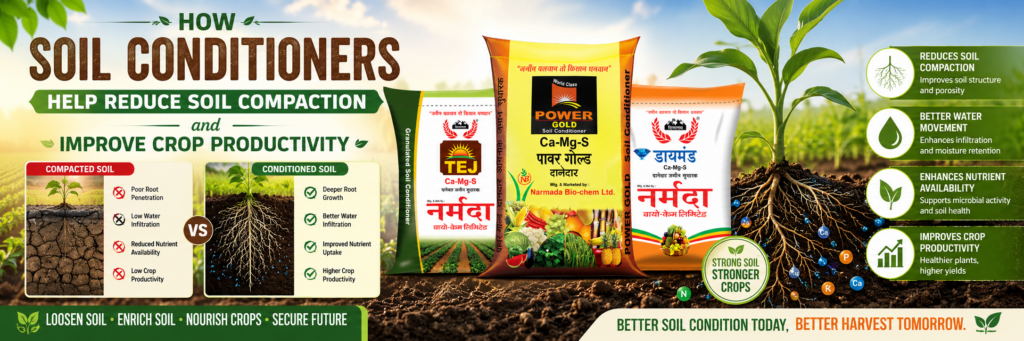
When soil becomes compacted, it becomes harder for roots, water, air, and beneficial microorganisms to move through it.
As a result, crop growth can be severely affected.
How Soil Compaction Affects Crop Growth
Many farmers do not immediately notice soil compaction because it develops gradually. However, its impact on crop productivity can be significant.
1. Restricted Root Development
Plant roots need loose soil to grow and spread. In compacted soil, roots struggle to penetrate deeper layers.
This leads to:
- Weak root systems
- Reduced nutrient uptake
- Poor water absorption
Without healthy roots, crops cannot reach their full potential.
2. Poor Water Infiltration
Compacted soil absorbs water more slowly.
Instead of soaking into the ground, water often runs off the surface, causing:
- Water wastage
- Soil erosion
- Reduced moisture availability for crops
During dry periods, crops become more vulnerable to stress.
3. Limited Air Movement
Plant roots and beneficial soil organisms require oxygen to survive.
Compacted soil reduces air spaces, limiting oxygen availability and negatively affecting root health and microbial activity.
4. Reduced Nutrient Availability
Healthy soil organisms help break down organic matter and release nutrients for plants.
When soil is compacted, microbial activity decreases, reducing nutrient availability and affecting crop growth.
What are Soil Conditioners?
Soil conditioners are products designed to improve soil structure and enhance its physical, chemical, and biological properties.
They can be organic, mineral-based, or biological in nature.
Common examples include:
- Organic matter and compost
- Humic substances
- Bio-based soil conditioners
- Soil-enhancing minerals
- Microbial soil conditioners
Their primary goal is to improve soil quality and create better growing conditions for crops.
How Soil Conditioners Reduce Soil Compaction
1. Improving Soil Structure
One of the most important functions of soil conditioners is improving soil aggregation.
They help soil particles bind together into stable aggregates, creating spaces for:
- Air movement
- Water infiltration
- Root growth
This results in a more open and productive soil structure.
2. Increasing Organic Matter
Many soil conditioners add organic matter to the soil.
Organic matter acts like a natural sponge and binding agent. It helps loosen compacted soil and improves its overall texture.
Higher organic matter levels also support beneficial microorganisms.
3. Enhancing Water Movement
Soil conditioners improve the soil’s ability to absorb and retain water.
This helps:
- Reduce surface runoff
- Improve moisture availability
- Minimise waterlogging
Better water management directly contributes to healthier crops.
4. Supporting Microbial Activity
Healthy soil contains millions of beneficial microorganisms.
Soil conditioners encourage microbial growth by providing a suitable environment and food sources.
These microorganisms help:
- Break down organic matter
- Improve nutrient availability
- Enhance soil fertility
5. Promoting Root Penetration
When soil becomes loose and well-structured, roots can grow deeper and spread more effectively.
This enables plants to access nutrients and water from a larger soil volume, resulting in stronger growth and improved productivity.
Benefits of Soil Conditioners for Crop Productivity
1. Stronger Plant Growth
Improved root development allows crops to establish more quickly and grow more vigorously.
Farmers often observe:
- Better germination
- Faster crop establishment
- Increased plant vigour
2. Improved Nutrient Efficiency
Healthy soil enables crops to absorb nutrients more effectively.
This can improve the performance of fertilisers and reduce nutrient losses.
3. Better Drought Tolerance
Improved water retention helps crops withstand periods of limited rainfall.
This is particularly important in regions where water availability is unpredictable.
4. Higher Yield Potential
When crops have access to sufficient water, nutrients, and oxygen, they can achieve higher productivity.
Farmers may experience:
- Increased biomass production
- Better flowering and fruiting
- Improved crop quality
- Higher yields
5. Long-Term Soil Health
Unlike short-term solutions, soil conditioners contribute to sustainable improvements in soil quality.
Over time, this leads to more resilient and productive farming systems.
Importance in Sustainable Agriculture
Modern agriculture must balance productivity with environmental responsibility.
Soil conditioners support sustainable farming by:
- Reducing soil degradation
- Improving soil biodiversity
- Enhancing water-use efficiency
- Supporting carbon sequestration
- Reducing dependence on excessive inputs
These benefits help protect natural resources while maintaining agricultural productivity.
Best Practices for Using Soil Conditioners
To maximise results, farmers should follow a few important practices:
1. Conduct Soil Testing
Understanding soil conditions helps determine the most suitable soil conditioner.
2. Apply Regularly
Soil improvement is an ongoing process. Consistent application provides better long-term results.
3. Combine with Organic Matter
Using compost and organic fertilisers alongside soil conditioners can enhance effectiveness.
4. Avoid Excessive Soil Disturbance
Reducing unnecessary tillage helps maintain improved soil structure.
5. Maintain Proper Irrigation
Balanced moisture levels support microbial activity and soil health.
How Narmada Bio-chem Limited Helps Farmers
Narmada Bio-chem Limited is committed to helping farmers improve soil health and crop productivity through advanced agricultural solutions.
1. Providing Quality Soil Conditioning Products
The company offers products designed to improve soil structure, enhance nutrient availability, and support healthy root development.
These solutions help farmers overcome challenges related to soil compaction and declining fertility.
2. Promoting Sustainable Farming Practices
Narmada Bio-chem Limited encourages responsible nutrient management and soil health improvement.
Its solutions support environmentally friendly farming methods that contribute to long-term productivity.
3. Supporting Root and Crop Development
By improving soil conditions, the company’s products help crops develop stronger root systems and better overall growth.
This leads to improved crop performance and higher yields.
4. Farmer Education and Technical Guidance
The company actively supports farmers by providing information on:
- Soil management practices
- Nutrient management
- Product application methods
- Sustainable agriculture techniques
This guidance helps farmers make informed decisions and achieve better results.
5. Enhancing Farm Profitability
Healthier soil leads to healthier crops. By helping farmers improve soil productivity, Narmada Bio-chem Limited contributes to increased yields, better crop quality, and improved profitability.
The Future of Soil Health Management
As agriculture continues to evolve, soil health will become even more important. Farmers are increasingly recognising that sustainable productivity starts below the surface.
Soil conditioners are expected to play a major role in future farming systems because they address one of the most fundamental challenges in agriculture, maintaining healthy, productive soil.
With continued innovation and support from organisations like Narmada Bio-chem Limited, farmers can build stronger soils, improve crop performance, and secure long-term agricultural success.
Conclusion
Soil compaction is a hidden challenge that can significantly reduce crop productivity. It affects root growth, water movement, nutrient availability, and overall soil health.
Soil conditioners offer an effective solution by improving soil structure, increasing organic matter, enhancing microbial activity, and promoting healthy root development. These improvements create better growing conditions and support higher crop yields.
Narmada Bio-chem Limited continues to help farmers overcome soil-related challenges through innovative products, technical expertise, and a commitment to sustainable agriculture. By focusing on soil health today, farmers can build a stronger foundation for improved productivity and long-term farming success tomorrow.