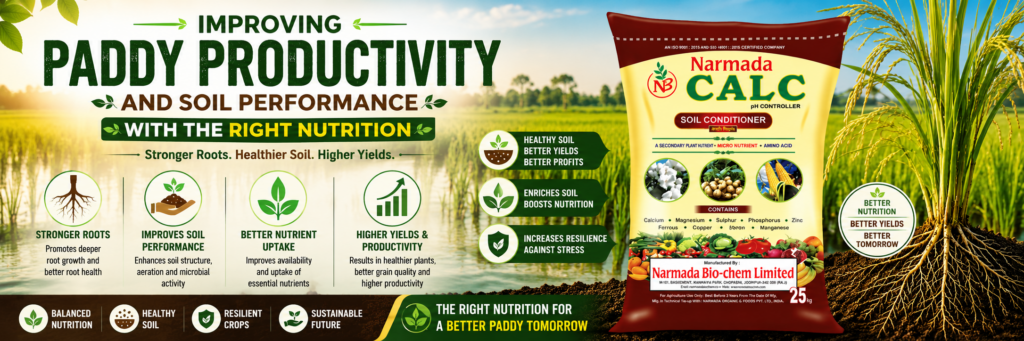
Paddy is one of the most important crops grown across India. It feeds millions of people and supports the livelihoods of countless farming families. However, achieving high paddy yields is becoming more challenging due to declining soil fertility, nutrient deficiencies, poor soil structure, and changing weather conditions.
To meet the growing demand for rice, farmers need to improve both crop productivity and soil performance. One of the most effective ways to achieve this is through the proper use of chemical fertilisers. When used in the right quantity and at the right time, chemical fertilisers help paddy plants grow stronger, produce more tillers, and deliver higher grain yields.
At the same time, modern farming practices require a balanced approach that combines fertilisers with soil health management. This is where innovative agricultural solutions from Narmada Bio-chem Limited play an important role in helping farmers maximise crop performance while maintaining soil quality.
Why Paddy Needs Balanced Nutrition
Paddy is a nutrient-intensive crop. During its growth cycle, it removes large amounts of nitrogen, phosphorus, potassium, sulphur, and micronutrients from the soil.
If these nutrients are not replenished, the soil gradually becomes less fertile, leading to:
- Poor seedling establishment
- Reduced tillering
- Weak root development
- Lower grain filling
- Increased susceptibility to pests and diseases
- Declining yields over time
Chemical fertilisers provide essential nutrients in readily available forms that plants can absorb quickly. This ensures healthy growth throughout the crop cycle and supports higher productivity.
The Role of Chemical Fertilisers in Paddy Cultivation
1. Nitrogen Fertilisers
Nitrogen is the most important nutrient for paddy growth. It promotes:
- Vigorous vegetative growth
- Better leaf development
- Increased tiller formation
- Enhanced photosynthesis
Common nitrogen fertilisers include urea and ammonium sulphate. Proper nitrogen management can significantly improve paddy yields.
However, excessive nitrogen application can lead to lodging, increased pest attacks, and nutrient losses. Therefore, a balanced application is essential.
2. Phosphorus Fertilisers
Phosphorus supports:
- Strong root development
- Early crop establishment
- Better flowering
- Improved grain formation
Diammonium phosphate (DAP) and single super phosphate (SSP) are commonly used phosphorus fertilisers in paddy cultivation.
Adequate phosphorus helps young plants establish quickly and utilise water and nutrients more efficiently.
3. Potassium Fertilisers
Potassium improves:
- Water-use efficiency
- Disease resistance
- Stem strength
- Grain quality
Muriate of potash (MOP) is widely used in paddy fields. Potassium helps plants withstand environmental stress and improves overall crop performance.
4. Secondary Nutrients and Micronutrients
Apart from NPK, paddy also requires:
- Sulphur
- Zinc
- Magnesium
- Iron
- Boron
Deficiencies of these nutrients can severely affect growth and yield. Soil testing helps identify nutrient gaps and enables targeted fertiliser application.
How Chemical Fertilisers Improve Paddy Productivity
1. Increased Tillering
Tillers are the stems that eventually produce grain-bearing panicles. Adequate nutrient supply encourages more productive tillers, leading to higher yields.
2. Better Root Development
Balanced fertilisation promotes stronger roots that can absorb more nutrients and water from the soil.
3. Improved Grain Filling
Nutrients supplied during reproductive stages help grains develop fully, resulting in higher grain weight and better quality.
4. Enhanced Disease Tolerance
Well-nourished plants are generally stronger and more capable of resisting diseases and environmental stress.
5. Higher Yield Potential
When nutrients are available throughout the crop cycle, paddy plants can achieve their full genetic yield potential.
The Importance of Soil Performance
While fertilisers are essential for crop growth, long-term productivity also depends on soil performance.
Healthy soil provides:
- Good water retention
- Proper aeration
- Strong root penetration
- Efficient nutrient availability
- Beneficial microbial activity
Continuous cultivation without proper soil management can lead to:
- Soil compaction
- Nutrient depletion
- Reduced organic matter
- Poor water infiltration
Therefore, improving soil performance should be a key part of every paddy farming strategy.
Combining Fertilisers with Soil Health Management
Modern agriculture focuses on balanced nutrient management rather than relying solely on fertilisers.
Farmers can improve results by:
- Conducting regular soil testing
- Applying fertilisers based on crop needs
- Using soil conditioners
- Incorporating organic matter
- Adopting integrated nutrient management practices
This approach improves fertiliser efficiency while supporting long-term soil productivity.
How Narmada Bio-chem Limited Helps Paddy Farmers
Narmada Bio-chem Limited offers a wide range of agricultural solutions designed to help farmers improve crop productivity and soil health.
The company’s products support farmers by enhancing nutrient availability, improving soil conditions, and promoting better crop growth.
1. Bio-Liquid Fertilisers
Narmada Bio-chem Limited provides bio-liquid fertilisers that help improve nutrient uptake and support healthy plant growth.
These products can complement chemical fertiliser programmes by increasing nutrient use efficiency and reducing nutrient losses.
Benefits include:
- Improved nutrient absorption
- Enhanced root growth
- Better crop vigour
- Increased yield potential
2. Soil Conditioners
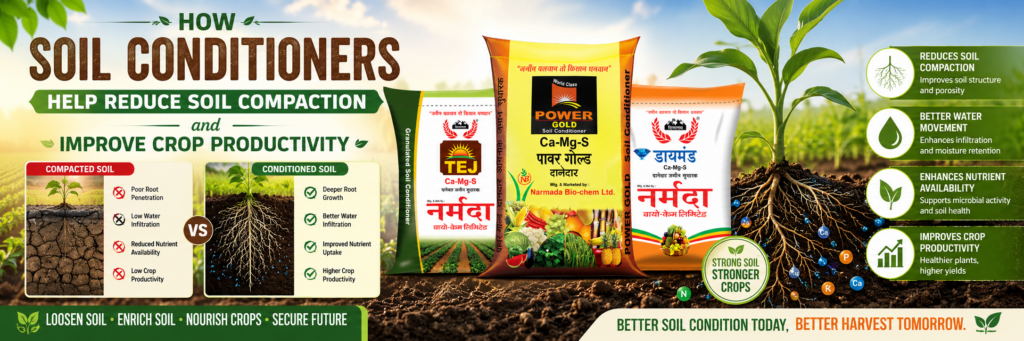
Soil conditioners from Narmada Bio-chem Limited help improve soil structure and reduce compaction.
Their benefits include:
- Better water infiltration
- Improved root penetration
- Enhanced microbial activity
- Increased nutrient availability
For paddy farmers, healthier soil means stronger crop establishment and more consistent productivity.
3. Micronutrient Solutions
Micronutrient deficiencies are common in intensive paddy cultivation.
Narmada Bio-chem Limited offers specialised nutrient solutions that help correct deficiencies and support balanced crop nutrition.
These products contribute to:
- Better plant health
- Improved grain development
- Enhanced crop quality
- Higher yields
4. Sustainable Farming Support
The company focuses on helping farmers adopt sustainable agricultural practices that balance productivity with soil conservation.
By integrating advanced agricultural inputs with proper nutrient management, farmers can achieve better results while maintaining long-term soil fertility.
Best Practices for Fertiliser Application in Paddy
To maximise the benefits of chemical fertilisers, farmers should follow these recommendations:
1. Test the Soil First
Soil testing provides valuable information about nutrient status and helps determine the correct fertiliser requirement.
2. Apply Fertilisers at the Right Time
Different nutrients are needed at different growth stages. Timely application improves nutrient utilisation and crop performance.
3. Use Split Nitrogen Application
Applying nitrogen in multiple stages reduces losses and ensures continuous nutrient availability.
4. Maintain Proper Water Management
Water plays a critical role in nutrient uptake. Proper irrigation management improves fertiliser efficiency.
5. Combine with Soil Improvement Measures
Using soil conditioners and bio-based products alongside chemical fertilisers helps improve overall soil performance.
The Future of Paddy Farming
As agricultural challenges continue to grow, farmers must focus on both productivity and sustainability. Chemical fertilisers remain essential for meeting crop nutrient requirements, but they deliver the best results when combined with good soil management practices.
The future of successful paddy farming lies in balanced nutrition, improved soil health, and efficient resource use. Farmers who adopt integrated nutrient management strategies can achieve higher yields, better grain quality, and improved profitability.
Conclusion
Chemical fertilisers play a crucial role in improving paddy productivity by supplying essential nutrients that support healthy growth, strong tillering, and higher grain yields. However, long-term success depends on maintaining soil performance alongside nutrient management.
By combining balanced fertiliser use with soil conditioners, micronutrient solutions, and bio-liquid fertilisers, farmers can create healthier soils and more productive paddy fields.
Narmada Bio-chem Limited supports this goal through a range of innovative agricultural products that help improve nutrient efficiency, strengthen soil health, and enhance crop productivity. With the right combination of fertilisation and soil management practices, paddy farmers can achieve sustainable growth and maximise their harvest potential for years to come.